Arnaud Gotlieb: "ex septentrione lux" (light comes from the North)

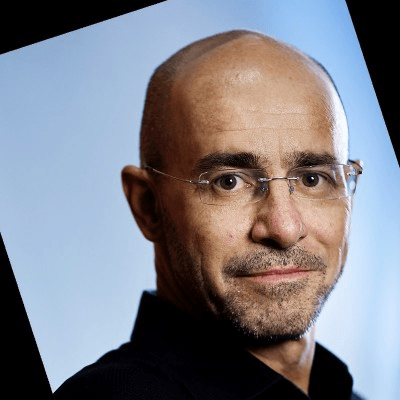
Alumni portrait
Arnaud Gotlieb agreed to be interviewed for this portrait. Enthusiasm and dedication!
Can you tell us about your career path leading up to your current role?
First of all, a huge thank you for inviting me to share my story as an Inria alumnus. It’s a real honour to share my journey with you. It’s been a journey with a few twists and turns, certainly, but between you and me, it’s really nothing out of the ordinary!
To put it simply: after studying pure Mathematics at the University of Nice – Sophia Antipolis, where I (finally) discovered a passion for Computer Science, I was offered an industrial PhD on the use of constraint logic programming for the automation of software testing. That’s how I ended up in the AI lab at Dassault Électronique, in the Paris region. A fun little detail: back then, ‘AI’ stood for Advanced Computing. Artificial Intelligence wasn’t really in vogue, and we had to hide the fact that we were doing AI at all costs!
As far back as I can remember, I’ve always wanted to do research, but the start of my career was… eventful. Dassault merged with Thomson-CSF, and the whole thing was renamed Thales. The end result: without ever changing offices, I managed the feat of changing employers three times in the space of five years! However, in 2002, personal reasons drew me to Brittany; so I applied for and joined Inria in Rennes, within the LANDE project team, then led by Daniel Le Métayer. For me, Inria was, and still is, the holy grail – the finest French institute for applied mathematics and computer science. Its international reputation confirms this every day. I spent nine wonderful years at Inria. I met brilliant researchers there, and was able to carry out my work with complete freedom, always supported by passionate colleagues and a supportive management team. Yet in 2011, I got the itch to move on; the call of the Far North was too strong!
I had never lived abroad or worked in a laboratory overseas. The opportunity arose to spend two years in Norway, working at Simula, a research institute founded in 2001 and dedicated to information and communication technologies (ICT). In Oslo, things moved very quickly. I was soon entrusted with significant responsibilities, including the management of Certus, a centre dedicated to software validation and verification, and subsequently that of the software engineering department. These responsibilities gave my career an unexpected boost. My “two-year stay” was extended, until I took the difficult decision to leave Inria for good and devote myself fully to Simula, which has since become Norway’s flagship institution for ICT research.
But you never really leave Inria! In recent years, the excellent relations forged between the management teams at Inria and Simula have given rise to several joint teams. Today, I co-lead RIPOST—an Inria-Simula joint team exploring the foundations of resilient software and software reproducibility—alongside Mathieu Acher (from the DIVERSE team in Rennes).
Since 2018, alongside my role as head of the VIAS department (dedicated to the intelligent validation of autonomous software systems), I have had the privilege of coordinating two major European projects on trustworthy AI, applied to automated driving and maritime traffic monitoring.
Looking back, I am quite proud to see Simula’s rise to prominence on the European stage, particularly in areas where competition is fierce. And, between you and me, I like to think that our long-standing and close ties with Inria have played no small part in this!
What would you like to tell us about your current work at Simula? What particularly fascinates you?
When I joined Simula in 2011, I discovered a bustling institute that reminded me of what Inria must have been like in its early years, ten years after its creation. It was an organisation still taking shape, seeking to establish itself and prove its worth within Norway’s already rich and competitive research ecosystem.
What immediately struck me about Simula was the approachability of the management team. It was an environment of trust where you could put forward bold, even disruptive, ideas, safe in the knowledge that you would be listened to and taken seriously. Gradually, I came to fully appreciate the human qualities of the founders and their remarkable ability to listen. I particularly appreciated that famous ‘Nordic temperament’: a way of approaching disagreements with great kindness, always with a constructive mindset to seek solutions together. This spirit, both pioneering and collaborative, deeply appealed to me.
From a scientific perspective, these years have been incredibly rewarding. Together with my colleagues in the VIAS department, we have been able to carry out particularly ambitious research at the intersection of software engineering and artificial intelligence. We have explored fascinating areas of application, such as industrial robotics, automated driving and maritime traffic. To tackle these challenges, we developed innovative solutions based on cutting-edge techniques such as test optimisation using constraint programming and machine learning, qualitative constraint acquisition, metamorphic testing, and deep learning networks based on Transformers. Absolutely fascinating topics.
You spent nine years at Inria in Rennes. What did that period mean for your career? And is there a project, a moment or an anecdote that particularly stood out for you?
My nine years at Inria have been both enriching and enjoyable. I have had the immense privilege of meeting some true luminaries of the research world who have inspired me deeply. I am, of course, thinking of Thomas Jensen, my supervisor on the CELTIQUE project team, but also of the IRISA ‘DREAM Team’ in Logic Programming, Distributed Systems and Software Engineering of that era: Olivier Ridoux, Yves Bekkers, Claude Jard, Paul Le Guernic, Thierry Jéron and Jean-Marc Jézéquel.
But if there is one anecdote that really marked my early years as a researcher, it is my appearance over twenty years ago at the legendary 68NQRT seminar at Inria Rennes (the old-timers will know exactly what I’m talking about!). That day, I’d decided to bring out the big guns. I was presenting a ‘rather difficult’ result on symmetric group homomorphisms to explain a non-trivial result in software test optimisation. In short, the sort of talk tailor-made to give the audience a proper headache!
At the end of my performance, I spot a small man with a black beard hurrying down the steps. He has that rare look in his eyes – at once piercing, as if he were reading the innermost thoughts of those around him, and deeply mischievous. He approaches me with a smile and congratulates me with a warmth that takes me aback. This gentleman, of the utmost simplicity and humility, was none other than Gilles Kahn, one of the pioneers whose work has nourished and inspired entire generations of researchers. At that very moment, my internal processor underwent a total kernel reset. The emotion overwhelmed me with such force that I instantly lost the ability to speak or think. The result? I stood there literally petrified, unable to utter a single syllable or stammer a simple “thank you”. He must surely have thought that the young specialist in the symmetric test hadn’t exactly set the world alight when it came to conversation!
Even though I didn’t know him personally, his immense kindness leads me to believe that this cruel feeling of having looked utterly stupid existed, in the end, only in my head. In any case, it remains, even today, an absolutely unforgettable memory!
Today at Simula, you continue to collaborate with Inria as part of an associated team, and within the broader framework of the partnership between the two institutions. Why is it important to you to maintain these collaborations?
When I joined Simula in 2011, the similarities between the two institutes were immediately apparent to me. Not only in terms of the scientific topics addressed, but also in the mindset and kindness of the scientific, administrative and management staff. I am convinced that modern, impactful research is no longer the work of isolated geniuses, but the result of intense collaboration between teams spread across the globe. “Strength in numbers” takes on its full meaning in research, and fostering collaboration between Simula and Inria is, in my view, an essential mission. For the past five years, together with Mathieu Acher’s team in Rennes, we have joined forces in a unique spirit of collaboration to develop profound research results. It is fascinating to see that the joint team we initiated has now surpassed us: new individual collaborations are emerging spontaneously, such as the one between my colleague Helge Spieker from Simula, Théo Matricon and Paul Temple from Inria, to name but one example. It is an extremely exciting dynamic.
In 2011, you left France to join Simula in Norway, embarking on a personal and professional adventure. What advice would you give to those considering an experience abroad?
Moving abroad to join a world-class laboratory and gain unique skills requires some sacrifices, but it is well worth the effort. With this conviction, I would gladly adapt the famous rallying cry of the 19th-century pioneers, ‘Go West, Young Man’, to urge the new generation of researchers: ‘Go North, Young Man’! Scientific emigration to the Scandinavian countries (Norway, Sweden, Denmark, Finland) has become one of the most sought-after and strategic career paths for researchers worldwide.
These countries have succeeded in building a research ecosystem that moves away from the ultra-competitive and sometimes exhausting model found in North America, offering a vision where scientific excellence goes hand in hand with quality of life and a strong sense of community.
What role can a community like Inria+alumni play for you today? And would you be interested in exchanges or meetings with other alumni based in Norway or elsewhere?
Being part of the Inria Alumni is a real honour for me, as it reflects my deep attachment to the Institute, its values and its crucial role in the European and global research landscape. I am convinced that this community has a major role to play, particularly in promoting the recruitment of young researchers across Europe and encouraging their international mobility. This network could also provide an opportunity to develop a streamlined exchange programme, dedicated to researchers wishing to broaden their horizons through international mobility.
A key phrase or quote to serve as the title for this profile?
“Ex septentrione lux” (light comes from the North)
Translated with DeepL.com (free version)
Comments0
Please log in to see or add a comment
Suggested Articles
![[Inria - Sophia Antipolis] Applying Mathematical Expertise to Environmental Challenges](/medias/image/96161014969d60e66dbbf3.png)

![[Inria-Sophia Antipolis] - A favorable environment for scientific exploration](/medias/image/198369525369b7c65122cf6.png)