
Portrait
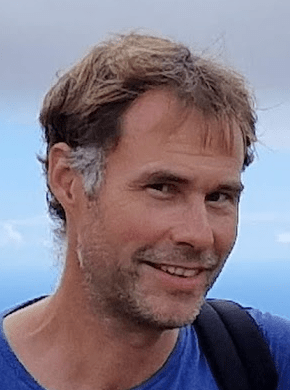
Alexis Joly agreed to take part in an interview-portrait.
Can you introduce yourself, your career path and your scientific specialities?
I am Director of Research at Inria and Scientific Director of Pl@ntNet. My work focuses on artificial intelligence applied to biodiversity, with a particular interest in learning from imperfect or ambiguous data and, more recently, multimodal models and large language models applied to ecological modelling.
My background is at the interface between machine learning, ecology and participatory science, with a constant desire to link fundamental research, concrete applications and societal issues.
We've seen the PlantNet for Dummies video, of course ;-) and Esprit Sorcier TV talks about the ‘Shazam for plants’... But can you tell us more? When did the project start, what does it consist of, what are its founding principles, how has it been rolled out...
The Pl@ntNet project started in the early 2010s, initially as a research project aimed at exploring how computer vision could help with plant identification. Very quickly, it was structured around a strong principle: combining artificial intelligence and participatory science.
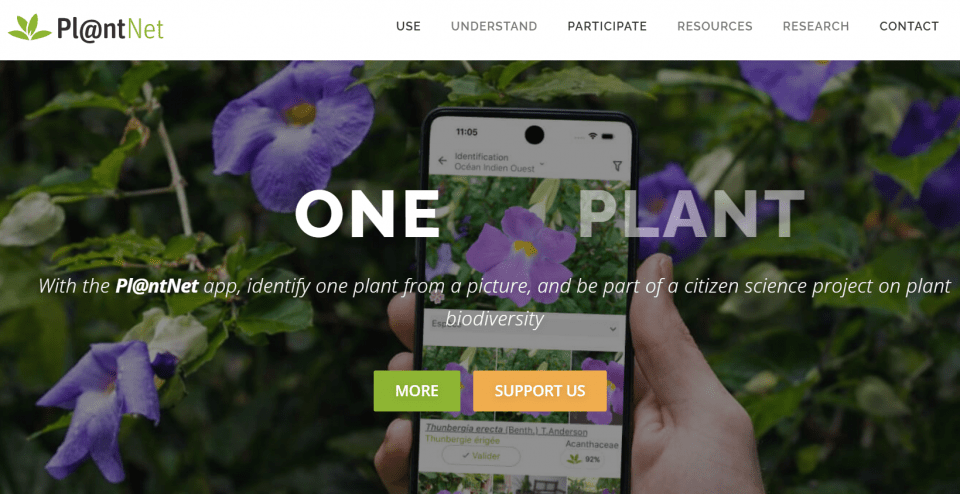
Pl@ntNet is now a consumer application, a plant biodiversity observatory and a scientific platform. Its founding principles remain the same: open data, scientific transparency, continuous improvement of models thanks to citizen contributions, and co-construction with scientific and naturalist communities.
What does the platform's ‘citizen format’ bring to the scientific community?
The participatory science angle is central. It allows data to be collected on a spatial and temporal scale that would be impossible to achieve using conventional methods. But above all, it profoundly transforms the relationship between science and society: citizens are not just data providers, they become genuine contributors to the production of knowledge. In the case of Pl@ntNet, this participation goes even further, since artificial intelligence itself is learned collaboratively from their contributions. This dynamic is part of an essential logic of reciprocity: citizens contribute to the development of tools and, in return, benefit from services and knowledge that are directly useful to them.
For research, this also poses exciting challenges: noisy and heterogeneous data, observation bias, taxonomic ambiguities, scaling... these are all concrete scientific problems that directly feed into our work in machine learning, particularly on AI methods that integrate humans into the loop.
Is there any news you would like to share with us regarding the development of Pl@ntnet?
Pl@ntNet is currently undergoing several major developments:
- the strengthening of multimodal models,
- the integration of more structured ecological and taxonomic knowledge,
- and developing higher value-added services for research and public policy, particularly around the concept of digital twins of biodiversity.
Another important area of development is agroecology. Pl@ntNet is actively working to adapt its tools to agricultural challenges, particularly to assist in the identification of plant diseases. This feature, designed for farmers, technical advisors and the general public, will be widely available at the 2026 International Agricultural Show. It illustrates Pl@ntNet's desire to use artificial intelligence to promote more sustainable agricultural transitions by facilitating access to diagnostic tools based on scientific data and knowledge.
Do you remember your impressions during your first few months at Inria? When was that again? Looking back, what memorable events or moments from your time at Inria, or what anecdotes can you share with us?
I joined Inria almost twenty years ago. My first few months were marked by great intellectual freedom and rich interdisciplinary exchanges, which greatly helped shape my research interests.
A highlight was the 2020 Inria – Académie des sciences – Dassault Systèmes Prize awarded to the Pl@ntNet team. This recognition made the transition from a research prototype to a tool widely adopted by the public tangible: seeing a scientific object become an everyday tool is a very powerful experience.
What values do you share with Inria?
I share Inria's values of international openness, scientific rigour, service to society and commitment to major contemporary issues.
Translated with DeepL.com (free version)
Comments0
Please log in to see or add a comment
Suggested Articles

![[Inria-Sophia Antipolis] - A favorable environment for scientific exploration](/medias/image/198369525369b7c65122cf6.png)